
The Protocol
Soreness Isn't the Scorecard
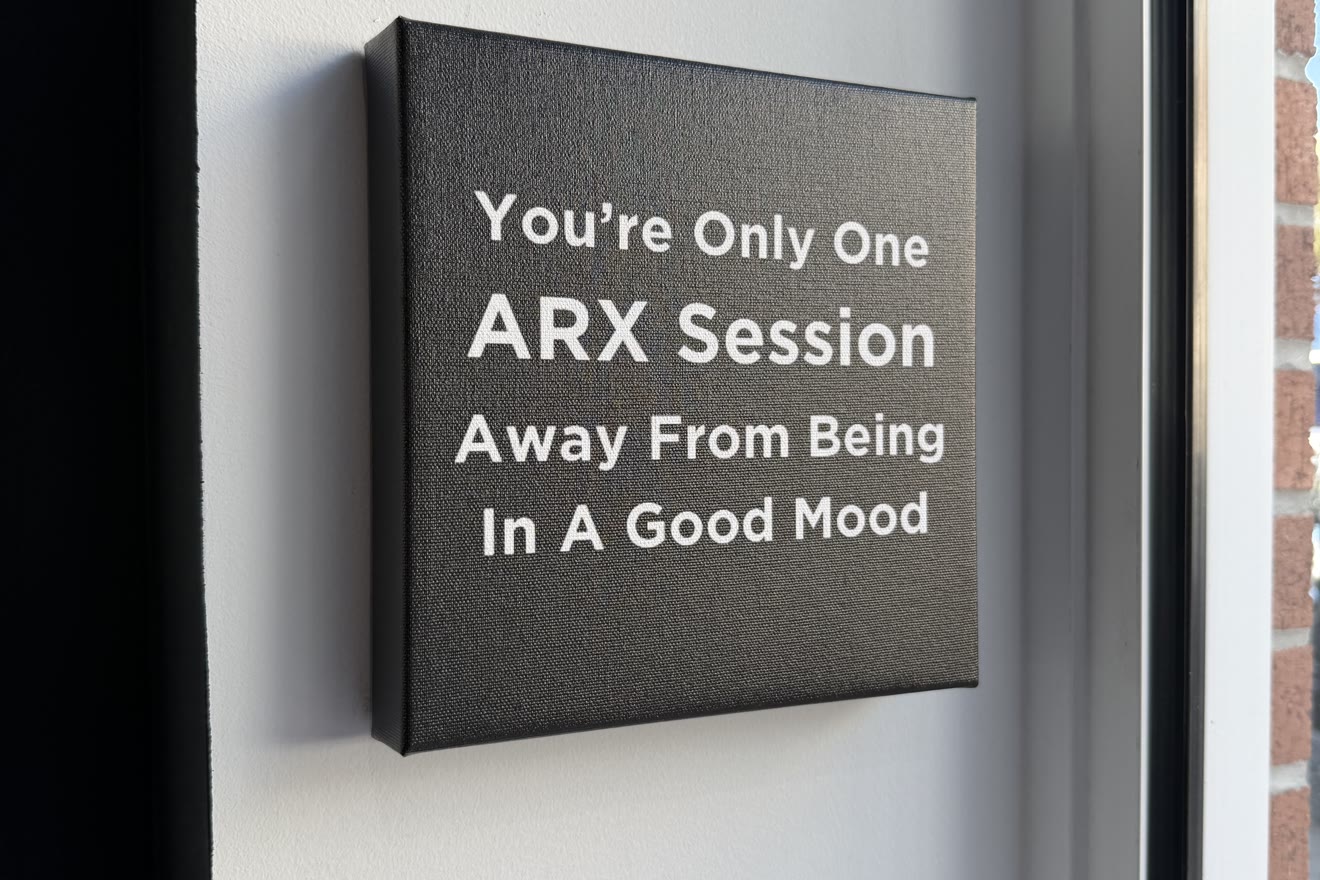
After his very first ARX session, a member texted us surprised: he’d gone all-out, genuinely emptied the tank, and yet he wasn’t nearly as sore the next day as he expected. We hear some version of this all the time. And buried in it is one of the most common myths in fitness:
“If I’m not sore, it didn’t work.”
It’s worth unpacking, because that belief quietly leads people to train worse.
What soreness actually is
That ache after a hard workout has a name: DOMS: delayed-onset muscle soreness. And here’s the first thing most people don’t realize: how much you get varies enormously from person to person. Two people can do the identical workout at the identical effort and one is wrecked for two days while the other barely notices. Genetics, sleep, hydration, training history, and plain individual difference all play a role. Some people are simply “low responders” to soreness. It says nothing about whether the work counted.
A second thing worth knowing: DOMS is delayed, and it often peaks 24 to 72 hours later, not the morning after. So feeling fine the next day doesn’t even mean you’re in the clear yet, and either way, it isn’t a verdict on the session.
Soreness is a sensation, not a measurement
This is the key reframe:
- Sore ≠ effective. You can be crushed by something that built almost nothing: a new sport, a long downhill hike.
- Not sore ≠ wasted. Plenty of people build real strength with surprisingly little soreness.
- How sore you get is mostly about you, your body, that day, not a readout of how productive the workout was.
Chasing soreness as proof of a good workout is like judging a meal by how full it makes you feel an hour later. It’s a feeling, not a metric.
Where ARX fits
So why does “I went hard but wasn’t that sore” come up with ARX? We won’t overstate it. Soreness has several drivers, chiefly unfamiliar movements and heavy lengthening-under-load, and it varies a lot from person to person. But one factor we can point to: the resistance is smooth and matched to the force you produce: there’s nothing to drop, no bouncing, no momentum, no being caught in a bad position under load. Some everyday soreness comes from that kind of jerky, uncontrolled loading, which ARX removes. The point was never to feel destroyed anyway; it’s to deliver a real stimulus and then recover so you adapt.
The better scorecard
Here’s the genuinely useful part: with ARX, you don’t have to guess. Every rep is measured: your force output is recorded each session. So instead of asking “am I sore enough?”, you look at the numbers: are you producing more force, holding it longer, improving over time?
That’s a real scorecard. Soreness is just a feeling, and often a misleading one.
As always, we’re describing how training and recovery generally work, not making a medical claim; some soreness is normal, and anything sharp, joint-related, or lasting beyond a few days is worth a conversation with a professional.
See your own numbers
The best way to stop guessing is to start measuring. Book a free studio tour and consultation in Downtown St. Pete. We’ll show you exactly how ARX tracks your output, no pressure, about 30 minutes.
Keep reading
The Protocol
Are 15-Minute Workouts Actually Effective?
Can a short workout build real strength? An honest, research-backed look at why a focused 15 minutes can work, with the caveats that matter.
The Protocol
Can 15 Minutes of Cardio Really Be Enough?
REHIT on the CAROL Bike promises a real cardio stimulus in minutes, not an hour. Here is the idea behind it, the honest caveats, and who it fits.