
Longevity
Is It Too Late to Build Muscle After 60?
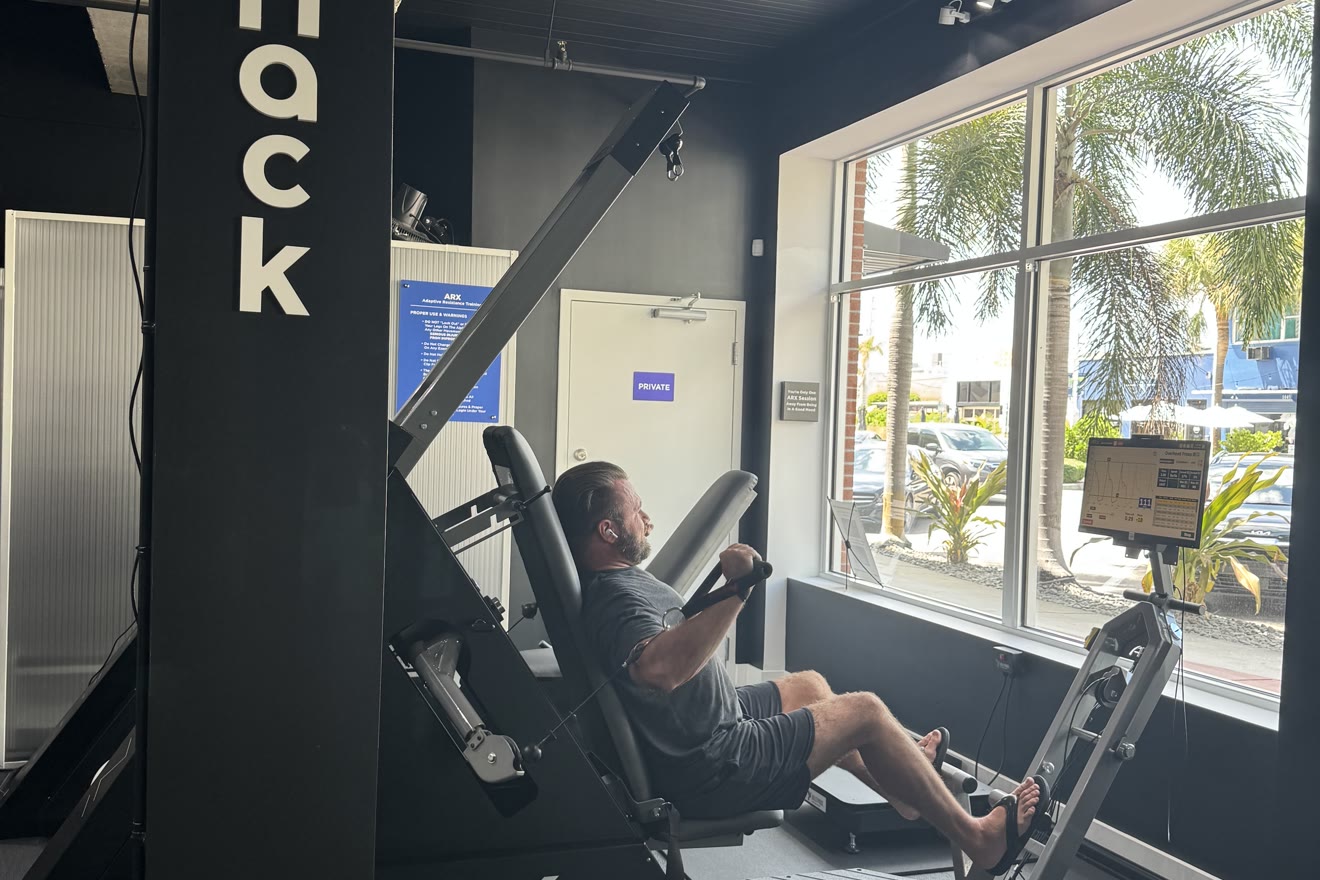
If you are over 60 and wondering whether the window to build muscle has quietly closed, here is the short answer: it has not. This is one of the more reassuring areas of exercise science, and it deserves to be said plainly.
The worry is understandable. Somewhere along the way, many of us absorbed the idea that strength is something you bank when you are young and slowly spend down for the rest of your life. That is not how the body works.
Can you really build muscle after 60?
Yes. Research consistently shows that older adults can gain strength and muscle through resistance training. The response to a real training stimulus does not expire with age. Your muscles still adapt when you ask them to produce meaningful force, the same way a younger person’s muscles do, even if the pace and the starting point look different.
Studies in this area have included adults in their 60s, 70s, and 80s, and the pattern holds: when previously sedentary older adults train consistently, they tend to get stronger and add muscle. We are keeping this general on purpose, because specific numbers vary by study and by person, and we would rather give you an honest direction than a borrowed statistic. The direction is this: it is not too late.
Why this matters more than it sounds
Building muscle after 60 is not about appearance. It is about staying capable.
Starting in our 30s and 40s, most adults gradually lose muscle mass and strength if they do nothing to counter it, and that decline tends to accelerate in later decades. The clinical term for age-related muscle loss is sarcopenia. Left unchecked, it is the quiet reason stairs start to feel steeper, a grocery bag feels heavier, and balance feels less certain.
Muscle is also metabolically active tissue. It supports blood-sugar regulation, helps maintain bone density, and acts as a reserve your body can draw on during illness or recovery from injury. Strength is closely tied to independence: the ability to get up from a chair, carry what you need, catch yourself if you stumble, and keep doing the things that make daily life yours. That is what people really mean when they talk about healthspan, the years you stay active and self-sufficient, not just the years on the calendar.
So the goal of training after 60 is not to chase what you could do at 25. It is to protect and rebuild the capability that keeps the next few decades on your terms.
”I haven’t trained in years” is the starting line, not the disqualifier
For a lot of people, the real barrier is not age. It is two practical fears.
The first is getting hurt. Heavy weights, unfamiliar machines, and the memory of an old injury are enough to keep many people from ever starting.
The second is the unknown. If you have not trained in a long time, or ever, walking into a conventional gym can feel like showing up to a test you did not study for.
Both are fair concerns, and both are solvable. The fact that you are starting from a lower baseline is not a problem. It often means the room to improve is right in front of you.
How ARX makes it safer to start
Our strength work is built on ARX adaptive-resistance machines. Instead of a fixed stack of weights, an ARX machine uses a computer-controlled motor that only ever resists the force you produce, matched moment to moment through the full range of motion.
That design removes the two things that worry people most. There is no external weight that can run away from you, so there is nothing to drop and no load that exceeds what you can control in the moment. And you set the intensity every second: if you ease off, the resistance eases off with you. That makes the same machine gentle enough for a true beginner and challenging enough for someone who has trained for years.
There is one real ARX study worth knowing about: a 12-week randomized controlled trial at Western Colorado University, published in the International Journal of Research in Exercise Physiology, which found that the ARX group saw greater strength, muscle, fat-loss, and cardio improvements while training roughly 72 percent less time. That was in previously untrained adults, and individual results vary, but it speaks to why a short, controlled session can still be a serious stimulus.
If a 15-minute strength session sounds more doable than an hour at a crowded gym, that is the point. You can read more about strength training over 60 in St. Petersburg and how we structure a first session.
A note on caveats
None of this replaces medical advice. If you have a heart condition, uncontrolled blood pressure, recent surgery, joint issues, or any chronic condition, please check with your physician before starting a new strength program. Good training works with your health history, not around it.
The takeaway
It is not too late to build muscle after 60, and the upside of starting is real: more strength, more stability, and more years of doing what you want to do.
The easiest first step is to feel it for yourself. Book a free studio tour and consultation in Downtown St. Pete. It takes about 30 minutes, there is no pressure, and we will map a plan to your goals.
Common questions
- Can you build muscle after 60?
- Yes. Research consistently shows that older adults can gain measurable strength and muscle from resistance training. The body still responds to the right stimulus, even if you have not trained in years.
- Is it too late to build muscle at 65 or 70?
- It is not. Studies have found that adults in their 60s, 70s, and even 80s can still make strength and muscle gains with consistent resistance training. Starting later does not close the door.
- Is it safe to start strength training after 60?
- For most people, yes, especially with tools that limit the load to what you can handle. ARX adaptive resistance only ever pushes back as hard as you push, so there is nothing to drop. Check with your physician before starting any new program.
- How long does it take to see results building muscle after 60?
- It varies by person and starting point, but many people notice strength gains within the first several weeks of consistent training. Visible muscle and functional changes tend to build over the months that follow.
Keep reading
Longevity
How Much Strength Training Do You Actually Need for Longevity?
Less than you think, if the quality is high. A look at how often to strength train for longevity, and why more sessions is not the same as better results.
Longevity
Low-Impact Strength Training for Seniors: Real Strength Without Heavy Weights
You do not need heavy barbells or high-impact workouts to build real strength after 60. The goal is meaningful resistance applied safely.