
Longevity
Low-Impact Strength Training for Seniors: Real Strength Without Heavy Weights
If you are over 60 and want to get stronger, you have probably run into two unhelpful messages. One says you are too old to start. The other says you have to throw around heavy barbells or jump into a high-intensity class to see results. Neither is true. You can build real, useful strength after 60, and you do not need heavy weights or high-impact training to do it.
What you need is meaningful resistance applied safely. That distinction is the whole point of this post.
What does “low-impact strength training” actually mean?
Low-impact does not mean low-effort. It means loading your muscles in a way that is hard for the muscle but easy on the joints, spine, and connective tissue. No jumping, no slamming, no momentum, and no risk of a heavy load getting away from you.
Your muscles do not know how many pounds are on a bar. They respond to tension and effort. So the goal is to give the muscle a real reason to adapt while removing the things that cause injuries: poor form under fatigue, runaway weight, and impact your joints did not sign up for.
That is the part many programs get backward. They chase intensity through risk. You can get the intensity without the risk.
Is CrossFit safe over 60?
This comes up a lot, and it deserves an honest answer rather than a cheap shot. CrossFit and similar high-intensity programs have helped plenty of people, including older adults, get fitter and more capable. The community and coaching can be genuinely good.
The honest caveat is this: explosive barbell lifts and timed, fatigue-driven workouts raise the stakes when form starts to slip. For someone over 60, especially anyone returning after a long layoff or managing a joint issue, that added risk matters more. A pulled back or a tweaked shoulder can cost you months of progress.
None of that makes high-intensity training wrong. It just means the question for most older adults is not “can I survive this class,” it is “what gives me strong results with the least chance of getting hurt.” For a lot of people, the answer is controlled resistance rather than explosive lifting. Your physician can help you judge what fits your situation.
Why controlled, adaptive resistance fits this stage
Here is what controlled resistance does well for older bodies:
- It removes momentum. Slow, controlled movement keeps the muscle working and keeps cheating out of the equation.
- There is nothing to drop. You cannot lose control of a load that adjusts to you.
- It meets you where you are. Resistance that matches the force you produce means you can work to genuine effort on a strong day and ease off naturally on a tired one.
- It is joint-friendly. No impact, no jarring, just smooth loading through your range of motion.
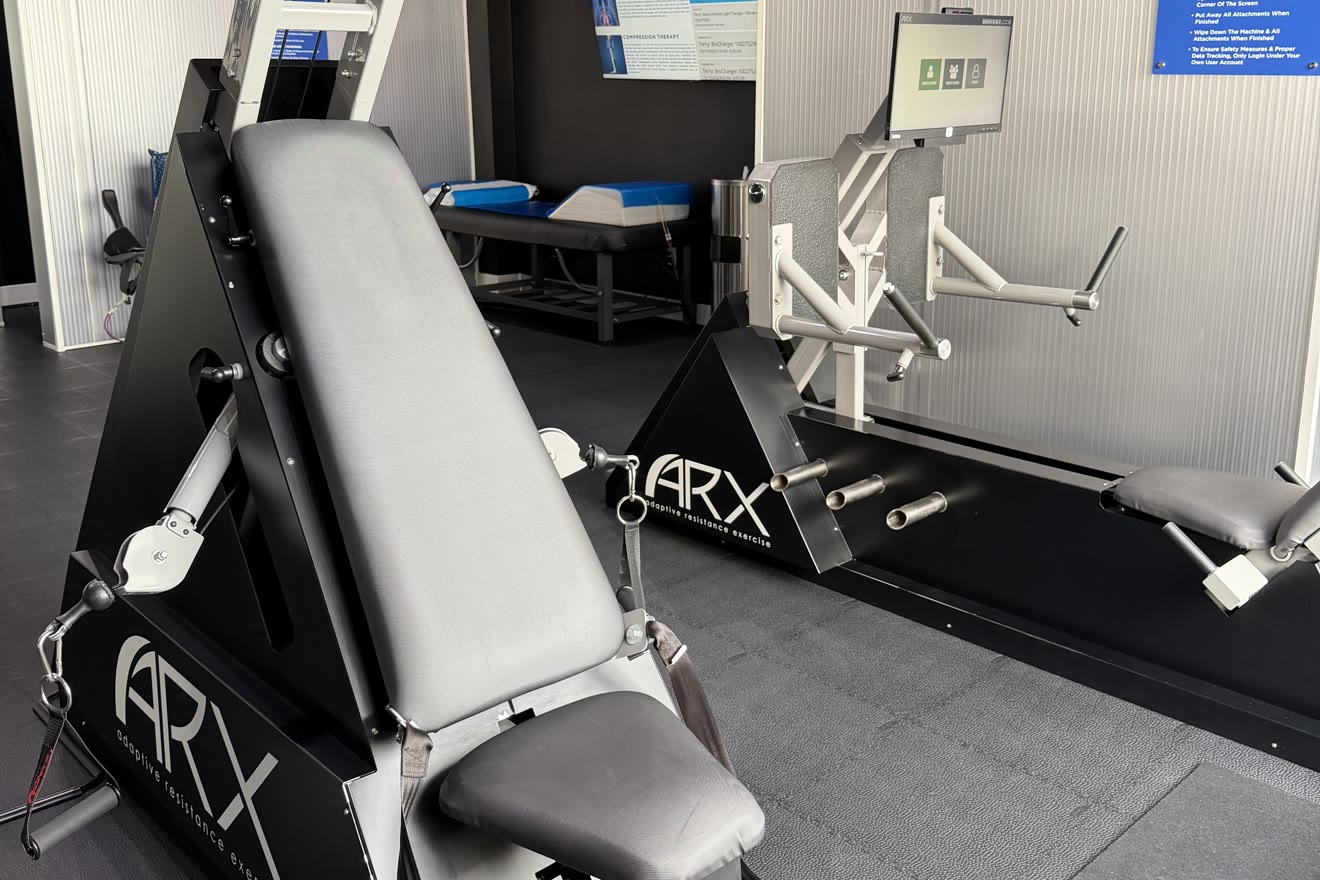
Our strength work uses ARX adaptive-resistance machines, where the resistance only ever matches the force you put in. There are no weights to lift or drop and no momentum to fight, so you can push to real effort safely. A 12-week randomized controlled trial at Western Colorado University, published in the International Journal of Research in Exercise Physiology, found that adults training on ARX saw greater gains in strength, muscle, fat loss, and cardio markers while training roughly 72% less time than a traditional group. That study was in previously untrained adults, and individual results vary, but it speaks to the idea that you do not need long, heavy sessions to get meaningful results.
What matters more than the method
Whatever approach you choose, a few principles hold:
- Meaningful resistance. The muscle needs a real reason to adapt. Going through the motions will not do it.
- Control over chaos. Smooth, controlled movement protects you and keeps the work where you want it.
- Consistency. Two solid sessions a week you actually keep beats an ambitious plan you abandon.
- Progress you can see. Measured output tells you it is working and keeps you motivated.
We built a full approach around training safely and effectively after 60, and the calm, private studio setting is part of why it works. No crowds, no waiting, no one watching. Just you and a structured session that takes about 15 minutes.
An honest note on health
Strength training supports muscle, bone, balance, and the kind of everyday capability that keeps you independent. It is not a medication and it does not replace your doctor’s guidance, especially if you have a heart condition, joint issues, osteoporosis, or any history of injury. Check with your physician before starting, then build the habit that protects the decades ahead.
See it for yourself
The easiest way to understand low-impact strength training is to feel it. Book a free studio tour in Downtown St. Pete. We will show you the machines, answer your questions, and map a plan to where you are today. No pressure, about 30 minutes.
Common questions
- What is the best low-impact strength training for seniors?
- Low-impact strength training means loading the muscles meaningfully without jarring impact, momentum, or the risk of dropping heavy weight. Controlled resistance machines, bands, and adaptive-resistance equipment all fit. The key is real effort with smooth, controlled movement.
- Is CrossFit safe over 60?
- CrossFit can be done by older adults, but its higher-intensity barbell and explosive movements carry more injury risk if form breaks down under fatigue. Many people over 60 do better with controlled resistance that removes momentum and the chance of dropping a load. Talk with your physician about what fits your body.
- Can you build muscle after 60 without lifting heavy weights?
- Yes. Muscle responds to meaningful effort, not to the number on a plate. Resistance that challenges the muscle through its full range, applied consistently, can support strength and muscle in older adults. Individual results vary.
- How often should older adults strength train?
- General guidance suggests strength training at least twice a week, with rest between sessions. Quality and consistency matter more than long workouts. Check with your physician before starting a new routine.
Keep reading
Longevity
How Much Strength Training Do You Actually Need for Longevity?
Less than you think, if the quality is high. A look at how often to strength train for longevity, and why more sessions is not the same as better results.
Longevity
Is It Too Late to Build Muscle After 60?
A common worry after 60 is that the window to build muscle has closed. The research is encouraging: the response to strength training does not expire.