
Longevity
Strength Training for Women Over 50: What Actually Matters
If you’re a woman over 50, you’ve probably been told to “do more cardio” and “watch what you eat” for most of your life. Both have their place. But the single most underused tool for women in this stage is resistance training, and the reasons are specific.
Why this stage is different
Around menopause, the drop in estrogen accelerates the loss of both muscle and bone. That shift quietly raises the risk of fractures and makes it easier to lose muscle and strength, which can also make it harder to maintain a healthy metabolism. It’s not a willpower problem. It’s physiology.
Strength training directly addresses the parts of that equation movement-only routines can’t:
- Bone density. Loading the muscles and skeleton signals the body to maintain bone. Research in postmenopausal women shows resistance training can help preserve or improve bone mineral density, a key factor in lowering long-term fracture risk.
- Muscle and metabolism. More muscle supports better blood-sugar handling and a more resilient metabolism.
- Balance and confidence. Stronger legs and core support steadier, more controlled movement, and, as part of a routine that also challenges balance, can help you stay active and independent.
What actually matters (and what to skip)
You don’t need to chase soreness, count to failure on a barbell, or spend an hour a day. What matters is simpler:
- Meaningful resistance, applied safely. The muscle needs a real reason to adapt, but it doesn’t need risk to get there.
- Consistency over intensity heroics. A challenging, well-recovered session you actually repeat beats an exhausting one you dread.
- Progress you can see. Measured output keeps you honest and motivated.
What you can skip: ego lifting, crowded gyms that make you want to quit, and any program that ignores how you feel walking out the door.
Why our approach fits
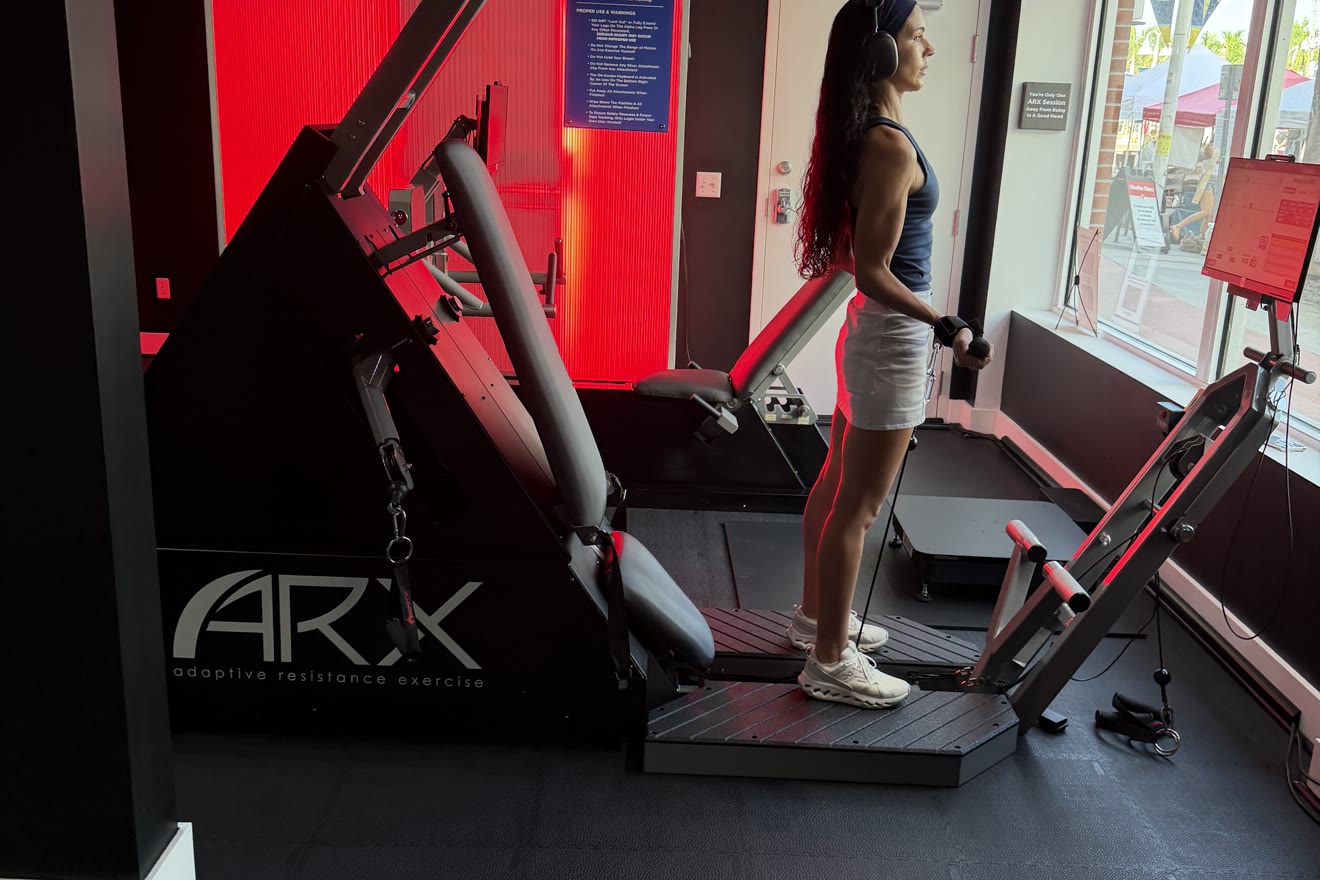
Our strength work uses ARX adaptive-resistance machines, where the resistance only ever matches the force you produce. There are no heavy weights to lift or drop and no momentum to fight, so you can work to genuine effort without the usual risk, and each session takes about 15 minutes. For many women over 50, that combination of safe and efficient is what finally makes strength training something they can stick with.
We built a whole approach around training safely and effectively after 60, and the same principles serve women in their 50s just as well.
A realistic, honest note
Exercise supports strength, bone, and metabolic health. It isn’t a medication and it doesn’t replace your doctor’s guidance, especially around menopause, bone health, or any existing condition. Check with your physician before starting, then build the habit that protects the decades ahead.
Start with a conversation
The hardest part is the first step. Book a free studio tour and consultation in Downtown St. Pete, we’ll show you the machines, answer your questions, and map a plan to where you are today. No pressure, about 30 minutes.
Keep reading
Longevity
How Much Strength Training Do You Actually Need for Longevity?
Less than you think, if the quality is high. A look at how often to strength train for longevity, and why more sessions is not the same as better results.
Longevity
Is It Too Late to Build Muscle After 60?
A common worry after 60 is that the window to build muscle has closed. The research is encouraging: the response to strength training does not expire.