
Longevity
Strength Training vs Cardio for Longevity: Which Matters More?
If you have ever stood in a gym wondering whether your time is better spent on the treadmill or the weights, you are asking one of the most common questions in fitness. For longevity, which one actually matters more?
The honest answer is that this is a little bit of a false choice. Both support healthy aging, and they do different jobs. But if we are talking about the piece most people under-invest in, especially after 40, it is strength.
What cardio does well
Cardiovascular exercise trains your heart, lungs, and circulatory system. A brisk walk, a bike ride, or a structured interval session improves how efficiently your body delivers oxygen, and research suggests that higher cardiorespiratory fitness is associated with better long-term health outcomes. This matters, and it is worth protecting.
Cardio is also accessible. You can do it almost anywhere, and most people already have some sense of how to start. That familiarity is part of why “do more cardio” became the default advice for decades.
The limitation is what cardio does not do. A spin class or a long walk trains your engine, but it does not send a strong signal to build and keep muscle and bone. That signal comes from a different kind of work.
Why muscle is the underrated lever after 40
Starting in our 30s and 40s, most adults gradually lose muscle mass and strength year over year if they do nothing to counter it, and that decline tends to speed up in later decades. The clinical term is sarcopenia. It is a slow leak, not a sudden break, which is exactly why it is easy to ignore until stairs feel different or a suitcase feels heavier.
Muscle is not just for movement. It is metabolically active tissue that supports blood-sugar regulation, helps maintain bone density, and contributes to balance and stability. Maintaining strength is closely tied to staying independent and capable in later decades. Researchers increasingly describe muscle as an organ of longevity, which is why protecting it becomes more important, not less, as you age.
Cardio cannot pull this lever. To build and preserve muscle and bone, you need resistance: asking a muscle to produce meaningful force against a load. That is the gap strength training fills, and it is the piece most longevity-minded people leave on the table.
You can read more about this in our post on why strength training matters most after 40 if you want to go deeper.
The good news: you do not have to choose
Here is the part that reframes the whole debate. The question “strength or cardio?” assumes the two compete for a fixed, large block of your week. For most busy adults, they do, and that scarcity is the real reason people end up doing one and skipping the other.
But the time cost of each is not fixed. When the quality of the stimulus is high, you can reach a meaningful training effect in far less time, which means strength and cardio stop fighting over your calendar.
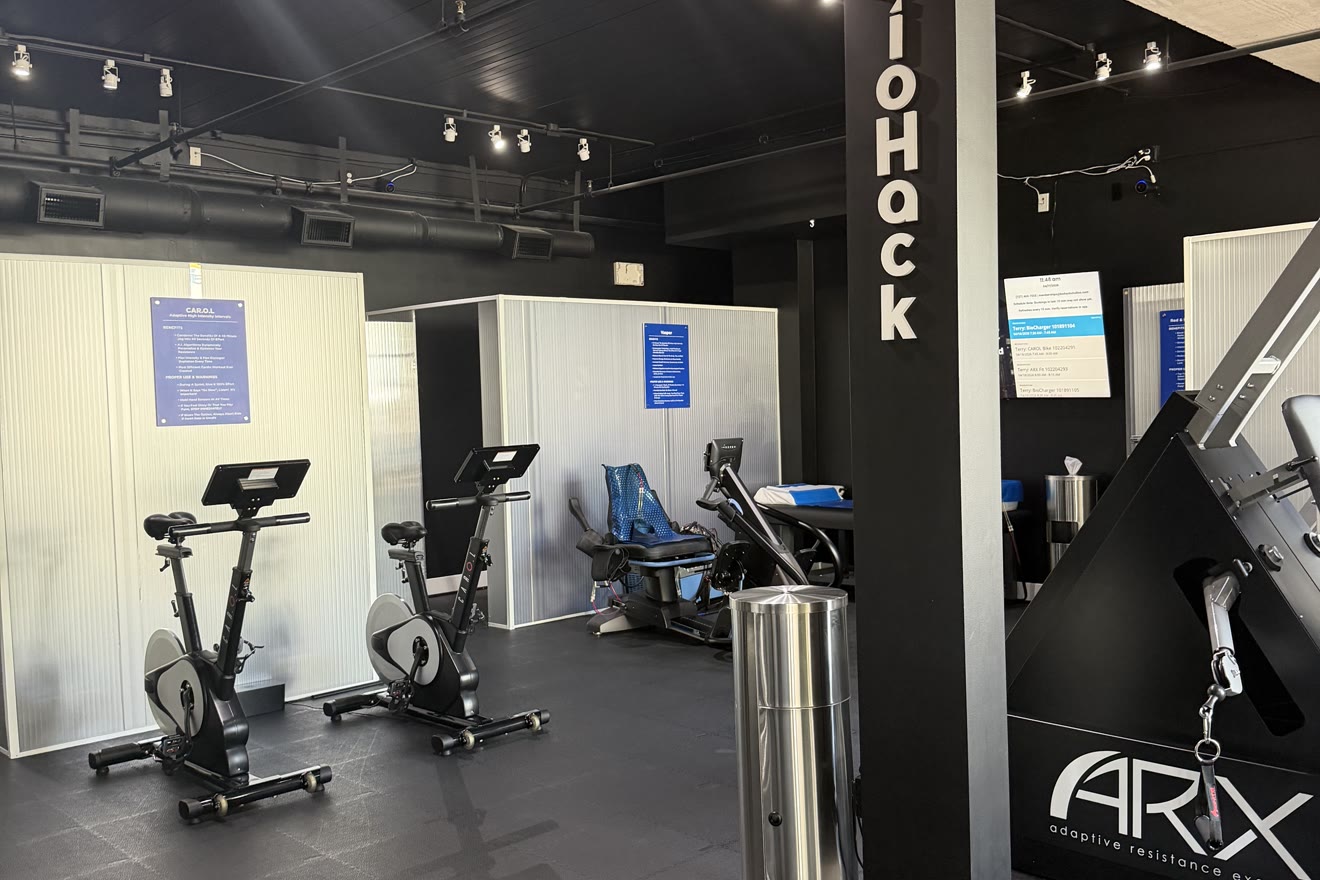
That is the logic behind our protocol. Our strength work uses ARX adaptive-resistance machines, computer-controlled resistance that only ever pushes back as hard as you push. There is nothing to drop and no way to load yourself beyond what you can handle, so you can train to genuine effort safely, and a complete strength stimulus takes about 15 minutes instead of 45.
In a 12-week randomized controlled trial at Western Colorado University, published in the International Journal of Research in Exercise Physiology, previously untrained adults using ARX saw greater strength, muscle, fat-loss, and cardio improvements while training roughly 72% less time than a traditional group. Individual results vary, and that study is one data point, not a promise.
For cardio, we use CAROL Bike REHIT, a short, structured ride built around brief all-out efforts. Research suggests that this style of high-intensity interval work can support cardiorespiratory fitness in a fraction of the time of steady-state cardio. The ride is measured in minutes, not the long sessions most people picture when they think of cardio.
Put together, a strength session and a cardio session can fit into a single short visit. That is how you stop choosing between the two.
The honest framing
We are describing general principles of how training supports healthy aging, not a prescription. The right balance of strength and cardio for you depends on your age, history, goals, and recovery, and it is worth discussing with a professional and your physician, especially if you have any medical considerations. Exercise supports strength, fitness, and longevity. It does not guarantee a specific outcome.
The takeaway
Strength versus cardio is the wrong fight. Both support healthspan, and after 40 the muscle-building side is the one most people neglect. The real win is doing both consistently, and the only way that happens for most busy people is to make each one efficient enough to actually keep up.
The easiest way to see how it fits your life is to feel it. Book a free studio tour and consultation in Downtown St. Pete, about 30 minutes, no pressure, and we will map a plan to your goals.
Common questions
- Is strength training or cardio better as you age?
- Both support healthy aging in different ways. Cardio trains your heart and lungs, while strength training builds and preserves muscle and bone, which becomes harder to maintain after 40. For most people the honest answer is that you benefit from doing both.
- What is the best exercise for healthspan?
- There is no single best exercise, but research consistently points to a combination of resistance training and cardiovascular work. Strength training is often the more underrated piece because muscle loss tends to accelerate with age if nothing counters it.
- Can I get strength and cardio benefits in less time?
- Higher-quality stimulus can lower the time cost of each session. At BioHack Studios, ARX strength work runs about 15 minutes and CAROL Bike REHIT cardio is a short, structured ride, which is how members fit both into a real schedule.
- Do I need to check with my doctor before starting?
- Yes. If you have any medical conditions or have not exercised in a while, talk with your physician before beginning a new strength or cardio program. Exercise supports health, but it does not guarantee a specific outcome.
Keep reading
Longevity
How Much Strength Training Do You Actually Need for Longevity?
Less than you think, if the quality is high. A look at how often to strength train for longevity, and why more sessions is not the same as better results.
Longevity
Is It Too Late to Build Muscle After 60?
A common worry after 60 is that the window to build muscle has closed. The research is encouraging: the response to strength training does not expire.