
Longevity
Why Strength Training Matters Most After 40
If you only have time to do one thing for your long-term health, the evidence keeps pointing in the same direction: build and keep muscle.
That can sound surprising. For decades the cultural default was “do more cardio.” Cardio matters, but somewhere around 40, a quieter problem starts working against you, and cardio alone doesn’t solve it.
The slow leak nobody warns you about
Starting in our 30s and 40s, most adults gradually lose muscle mass and strength year over year if they do nothing to counter it, a decline that tends to speed up in later decades. The clinical name for this age-related muscle loss is sarcopenia. You don’t feel it happening. It’s a slow leak, not a sudden break. Then one day stairs feel different, a suitcase feels heavier, or balance feels less certain.
Muscle isn’t just for movement. It’s metabolically active tissue that supports blood-sugar regulation, helps maintain bone density, and acts as a reserve your body draws on during illness or injury. Researchers increasingly describe muscle as an organ of longevity, which is why protecting it becomes more important, not less, as you age.
Strength is the lever cardio can’t pull
A brisk walk or a spin class trains your cardiovascular system beautifully. What neither does well is signal your body to build and preserve muscle and bone. That signal comes from resistance: asking a muscle to produce meaningful force against a load.
The good news: you don’t need to become a powerlifter. You need a stimulus strong enough to tell your body “keep this tissue,” delivered consistently and safely.
”I haven’t trained in years” is the point, not the problem
One of the most encouraging findings in exercise science is that the response to strength training doesn’t expire. Studies show adults in their 60s, 70s, and even their 80s can still gain measurable strength and muscle from resistance training. Starting later doesn’t mean starting hopeless. It means the upside is right in front of you.
The real barrier for most people over 40 isn’t motivation. It’s two practical worries:
- Safety: “What if I hurt myself with heavy weights?”
- Time: “I don’t have an hour, several times a week, to spend in a gym.”
Both are solvable, and solving them is the whole reason BioHack Studios exists.
How we approach it
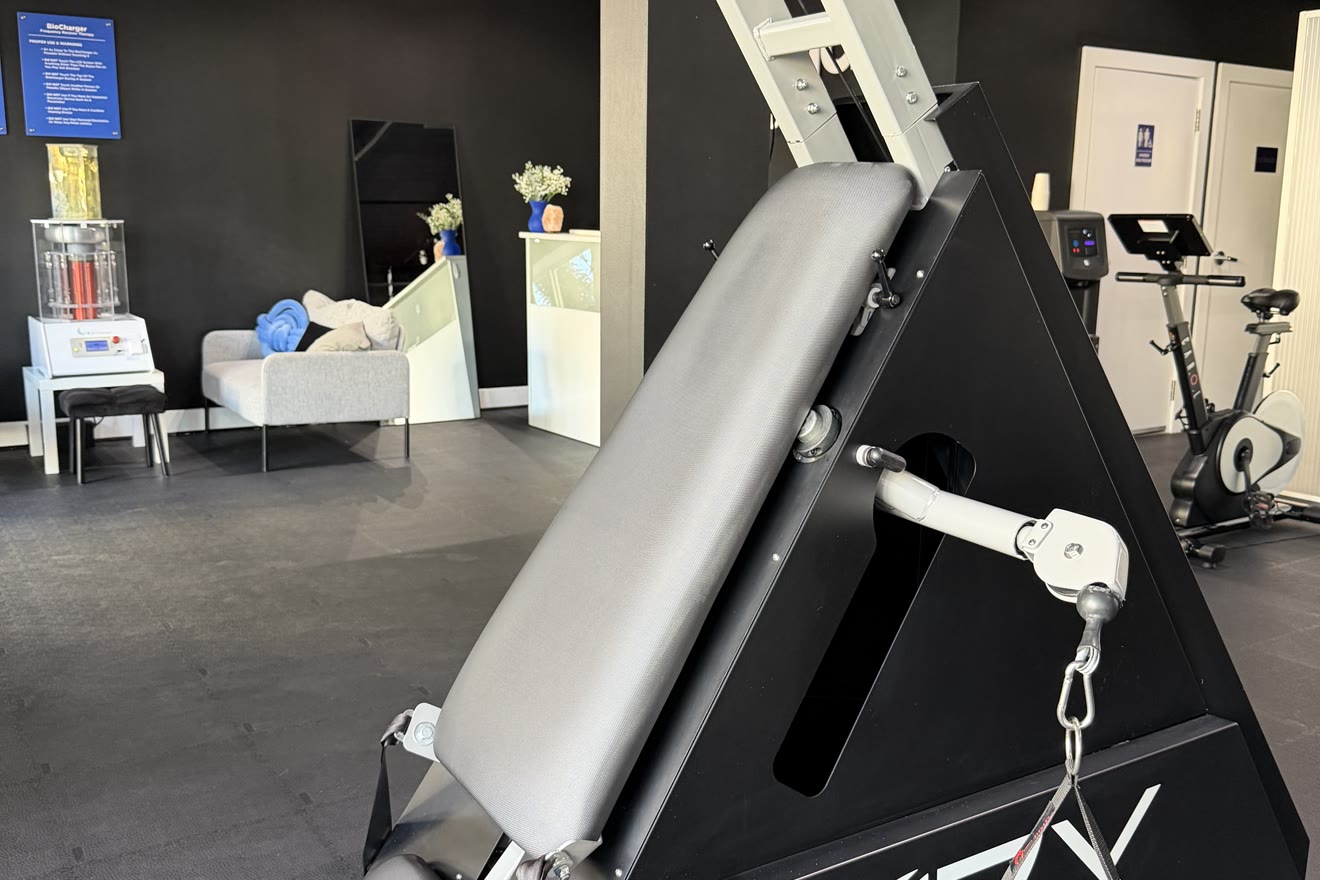
Our strength work is built on ARX adaptive-resistance machines: computer-controlled resistance that only ever pushes back as hard as you push. There’s nothing to drop, no momentum, and no way to load yourself beyond what you can handle, so you can train to genuine effort safely, whether it’s your first session or you’re a lifelong athlete. And because the resistance is maximized through the entire range of motion, a complete strength stimulus takes about 15 minutes instead of 45.
That combination, safe enough to start at any age, efficient enough to fit a real schedule, is what makes consistency possible. And consistency, over years, is what actually protects your healthspan.
The takeaway
After 40, strength training stops being about looking a certain way and starts being about staying capable for the decades ahead. It’s one of the highest-leverage habits you can build for healthy aging, and for most people, it’s never too late to start.
The easiest first step is to feel it for yourself. Book a free studio tour and consultation in Downtown St. Pete, about 30 minutes, no pressure, and we’ll map a plan to your goals.
Keep reading
Longevity
How Much Strength Training Do You Actually Need for Longevity?
Less than you think, if the quality is high. A look at how often to strength train for longevity, and why more sessions is not the same as better results.
Longevity
Is It Too Late to Build Muscle After 60?
A common worry after 60 is that the window to build muscle has closed. The research is encouraging: the response to strength training does not expire.